EPiC ran its first season in Chambéry in 2024. After years in marketing, I took on the work of running a small business, from designing the training programme and finding customers to managing suppliers, schedules and finances. By our third season, we were delivering nearly twice as many days of training across all participants as in our first.
When I co-founded EPiC with Yanis and Pierre, I knew how to define an offer, build a website and find an audience. I had spent years doing that as a marketing manager and director. Running a paragliding school meant taking responsibility for what happened after someone booked. We had to put an instructor on the calendar, have the right equipment ready, adapt to the weather and make sure the booking, payment and invoice all lined up.
Building the school around pilot training
EPiC grew out of a shared view of how we wanted to teach paragliding. We wanted beginners to have a clear route towards flying independently, and pilots who already flew to have somewhere local to keep progressing. We built a programme around those two needs, from introductory courses through to thermal flying and cross-country coaching. We also offer tandem flights for people who want to experience paragliding with an instructor. EPiC team · Courses and training
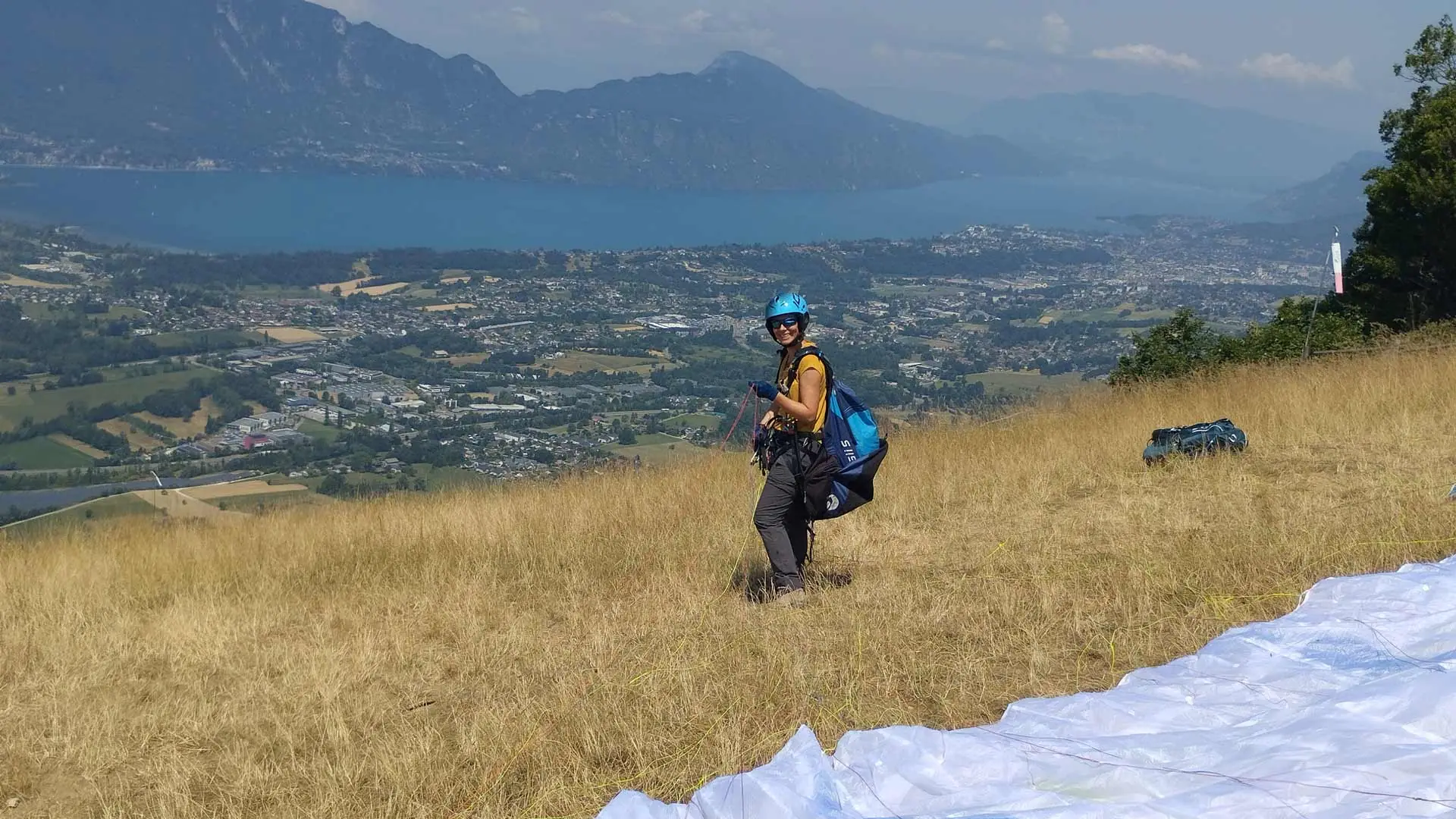
My role spans offer design, scheduling, commercial relationships, purchasing, communications, finance and bookkeeping. In a small school, those decisions land on the same desk. Adding a course to the programme means checking instructor availability, making sure we have suitable equipment and deciding where it fits in the season. If the weather changes the plan, we also have to keep students informed and make the schedule work again.
Local relationships helped us get started. The regional free-flight league gave us a temporary base in our first year. Les Z’éléphants Volants, the local club where the three of us developed as pilots, supported the school from the outset. We later set up a jointly funded training credit for club members. It gives local pilots a practical way to continue their training while staying connected to their club. EPiC’s local partnerships
Buying equipment and building a retail activity
Our first equipment purchases had to work for the school and for the budget. We needed wings and harnesses that suited different pilots and stages of training. Every purchase also committed cash, so choosing what to buy, in what quantity and when to renew it became part of running the business.
I set up commercial relationships with equipment brands including Bruce Goldsmith Design and Mac Para for wings, and Supair and Sky Paragliders for harnesses. EPiC became an authorised Mac Para retailer. A student can buy equipment they have already flown during a course, with advice from instructors who have seen them use it. We also sell directly to pilots who have never trained with us. That part of the business is the reason we plan to develop a dedicated online shop over the winter of 2026–27. EPiC’s equipment partners
How people find us and why they come back
I designed and launched the website around the decisions people make before booking. A first-time student needs to know which course to choose and what the week involves. A pilot looking to improve wants to know which skills we teach and what level they need to join. Giving those questions clear answers makes the site more useful to customers and gives organic search a role in bringing them to us. Word of mouth and organic search are our main sources of new business. EPiC’s website · Online booking
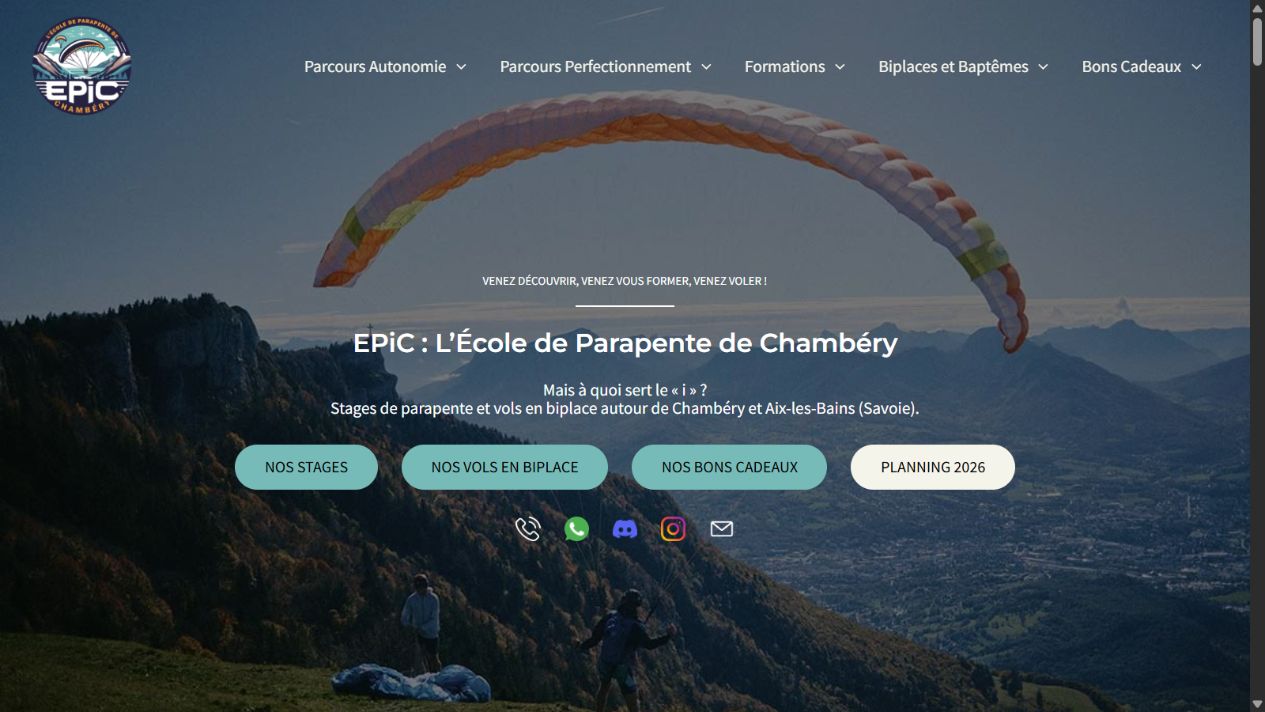
Tandem flights follow a different route. They represent roughly 5–10% of our commercial activity, and Grand Chambéry Alpes Tourisme is especially relevant to that side of the business. Its Chambéry Montagnes listing puts us in front of people looking for something to do in the area and gives them a direct route to booking. Chambéry Montagnes tourism listing
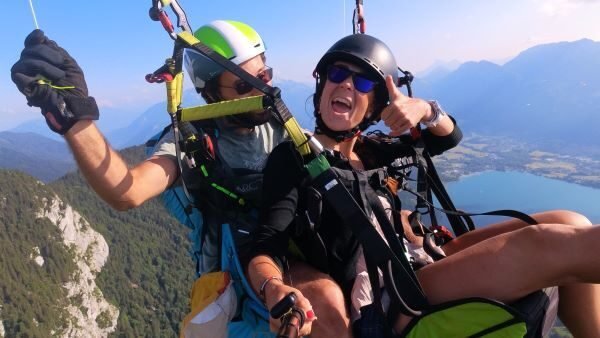
Discord serves a different purpose. It keeps us in touch with pilots after their courses. When we have an opportunity to run a progression day or an evening session, we can ask who is available and organise a group around the conditions. For a sport where the weather can change the plan at short notice, that is one of the most useful things a community channel can do. EPiC’s progression days and evening flights
Two tools that changed the working week
We started out preparing invoices and checking incoming bank transfers by hand. Both jobs meant going back to the booking, finding the right record and entering information we already had elsewhere. As the number of bookings grew, so did the time we spent doing this.
We built two internal tools around Book and Glide. The first uses course and tandem bookings to prepare invoices for review and links the invoice reference back to the booking. The second matches incoming bank transfers to reservations and records the payment against the right booking. If a match is ambiguous, someone on the team reviews it. Both tools took repetitive work out of the week and made it easier to see what still needed our attention.
What three seasons look like in numbers
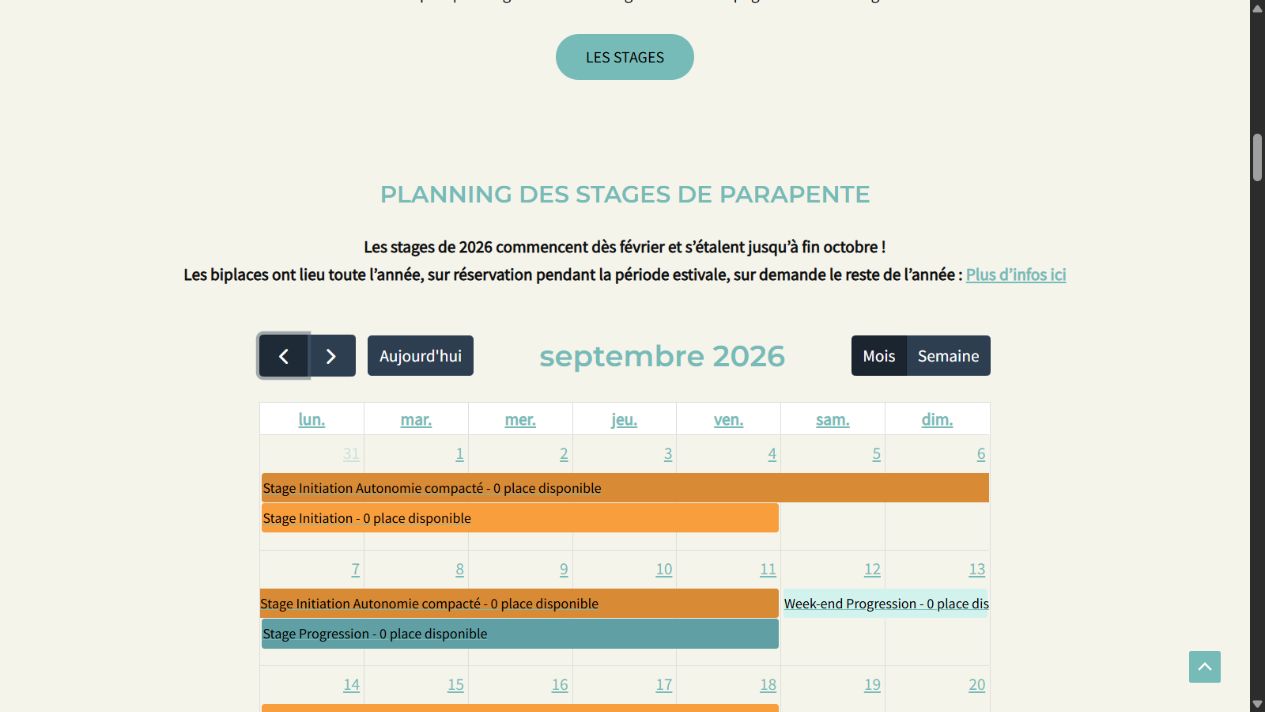
We offered more than 40 courses in our third season. To see what that programme meant in practice, I looked at recorded attendance. A participant-day is one person taking part in one day of training. EPiC’s 2026 programme
| Season | Participant-days |
|---|---|
| 2024 | About 540 |
| 2025 | About 900 |
| 2026, through early November | About 1,000 |
Course enrolments with recorded attendance rose by about 20% between the first and third seasons. By 2026, roughly half of the sessions we ran had six or more participants. Revenue also grew substantially over the period. The attendance figures tell me something I can use when planning the next season. They show how much more training we now deliver and how often we teach a group of that size.
This winter, I’ll be working on the online shop so pilots can browse our equipment offer directly. I’m also interested in testing whether people start finding local schools like ours through AI assistants. Both projects bring me back to a question I used to ask as a marketing director. How does a customer find what they need? As a business owner, I also have to work out what it takes to deliver it.